

How Our AI Blog Writer Creates Amazing Content Automatically
Learn how we use smart AI technology to write engaging blog posts and create beautiful images - all without human writers!

Imagine having a tireless writer who never sleeps, never gets writer's block, and can create dozens of high-quality blog posts every day. That's exactly what we've built using artificial intelligence. Our AI blog writer automatically creates engaging content complete with eye-catching images, helping businesses grow their online presence without the usual time and cost barriers.
What Makes Our AI Writer Special
We use Google Gemini, one of the most advanced AI systems available today. Think of it as having a brilliant writer and talented artist working together 24/7. This AI can both write compelling articles and create stunning visuals to match.
How the Writing Process Works
Our AI writer handles everything you'd expect from a professional content creator:
- Catchy Headlines: Creates titles that grab attention and help people find your content online
- Engaging Articles: Writes well-organized, informative content that keeps readers interested
- Quick Summaries: Provides short previews that entice people to read the full article
- Search Optimization: Automatically includes the right keywords to help your content rank higher on Google
- Clean Web Addresses: Creates simple, readable URLs for each post
The AI strikes the perfect balance between creativity and reliability, ensuring every piece of content is both interesting and accurate.
Creating Beautiful Images
Along with writing, our AI also acts as a visual artist, creating custom images for each blog post:
- Hero Images: Eye-catching main pictures that represent your article
- Supporting Visuals: 2-3 additional images that enhance the reading experience
The AI can create images in different shapes and sizes to fit perfectly with your website design, whether you need wide banners, square thumbnails, or standard rectangles.
How It All Works Behind the Scenes
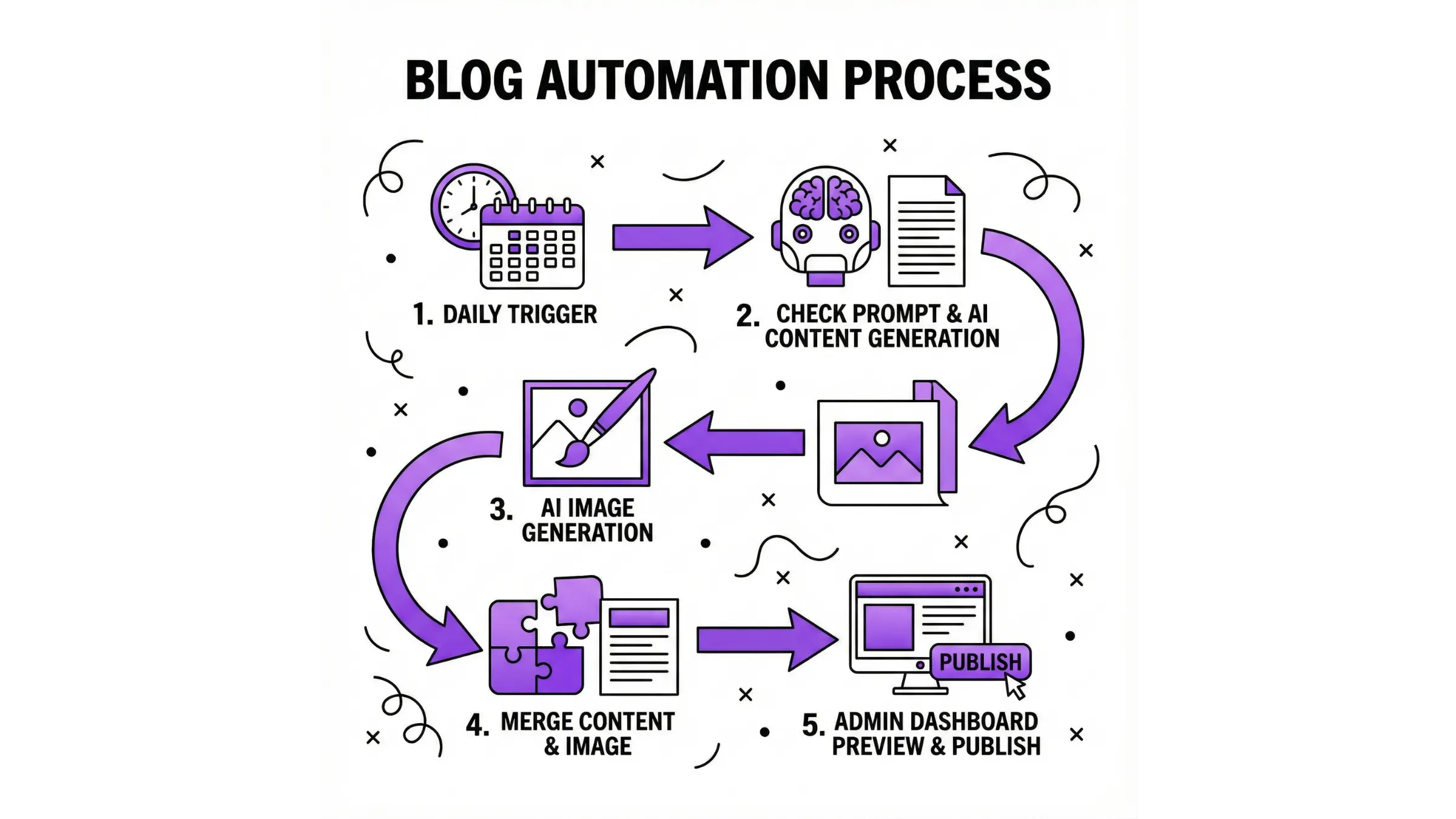
Here's the simple step-by-step process that happens automatically:
- The Schedule Kicks In: Our system runs on a schedule, like having an assistant who knows exactly when to start working
- Choosing What to Write About: The AI picks from pre-written topic ideas and writing styles we've prepared
- Writing the Article: The AI creates the complete blog post, from headline to conclusion
- Creating the Images: Custom visuals are generated to perfectly match the article content
- Publishing Preparation: Everything gets organized and prepared for your website
- Ready to Review: A complete blog post with images is ready for you to review and publish
This entire process happens without any human intervention, giving you a steady stream of fresh content while you focus on running your business.
What Does It Cost?
One of the biggest advantages of AI content creation is how affordable it is compared to hiring writers. Here's what you can expect:
Small Scale (10 blog posts)
- Total cost: Around $0.12 to $0.48
- Perfect for testing or small businesses just getting started
Medium Scale (100 blog posts)
- Total cost: Around $1.20 to $4.80
- Great for growing businesses that need regular content
Large Scale (1,000 blog posts)
- Total cost: Around $12 to $48
- Ideal for enterprises or content-heavy websites
What Affects the Price?
The actual cost depends on a few simple factors:
- Length of articles: Longer, more detailed posts cost slightly more
- Number of images: More visuals mean higher costs
- Current AI pricing: Technology costs change over time, usually getting cheaper
- Free credits: Many AI services offer free monthly allowances
Compare this to hiring human writers who might charge $50-200 per article, and you can see the massive savings potential.
Why AI Blog Writing is a Game-Changer
1. Never-Ending Content Creation
Imagine having a writer who never takes breaks, never gets tired, and can create content around the clock. That's exactly what AI offers. Whether you need 10 articles or 1,000, the system keeps working at the same high quality and speed.
2. Consistent Quality and Style
Every blog post follows the same high standards and maintains your brand's voice. No more worrying about different writers having different styles or quality levels - the AI ensures every piece of content meets your expectations.
3. Incredible Value for Money
At less than 50 cents per blog post (even for small batches), AI writing costs a fraction of what you'd pay human writers. This makes high-volume content creation accessible to businesses of all sizes.
4. Lightning-Fast Results
What takes a human writer hours or even days can be completed in minutes. From the initial idea to a publication-ready draft with images, the entire process happens faster than you can grab a coffee.
5. Built-in Search Engine Optimization
The AI automatically creates content that search engines love - proper headlines, relevant keywords, and well-structured articles that help your website rank higher in Google results.
Getting the Best Results
To make sure your AI blog writer performs at its best:
- Prepare Good Topic Ideas: Spend time creating clear, detailed topic suggestions that guide the AI toward the content style you want
- Always Review Before Publishing: While the AI creates great content, a human review ensures everything aligns with your brand and message
- Choose the Right Images: Select the generated images that best match your brand's look and feel
- Monitor Your Costs: Keep an eye on your usage to stay within budget, especially as you scale up
- Test Different Approaches: Try different topic styles and content types to see what resonates best with your audience
What's Coming Next
AI technology is advancing rapidly, and we can expect exciting improvements:
- Even Better Writing: AI will become indistinguishable from the best human writers
- Smarter Understanding: Better grasp of industry-specific topics and nuances
- More Stunning Visuals: Increasingly sophisticated and relevant image generation
- Lower Costs: As the technology matures, prices will likely continue to drop
The Bottom Line
Our AI blog writing system represents a revolutionary approach to content creation. By combining advanced AI writing with automatic image generation, we've created a solution that can produce professional-quality blog posts at unprecedented scale and affordability.
Whether you're a small business looking to establish an online presence or a large company needing hundreds of articles, this system provides a reliable way to maintain fresh, engaging content without breaking the bank.
The future of content marketing isn't just here - it's affordable, scalable, and ready to transform how you connect with your audience.